



Hold the Date
- CALERIE Working Group: First Tuesday at 3pm, Network members meeting
- Led by Dr. William Kraus
- Monthly, the first Tuesday at 3pm EST
- Updates on ongoing projects, discussions of complex physiology, review of data and analytics
- Please contact calerie@duke.edu for calendar invitations and more information.
Past Summits
- 2025 CALERIE Summit
The 2025 CALERIE Summit, held from April 28-30, 2025, was a multi-day event focused on advancing research in caloric restriction and aging. View Summit Schedule
Watch Summit Video Recordings Here
It began with an evening registration and welcome dinner featuring a presentation by Bill Kraus, followed by a keynote on macronutrients ...
12 + hours
Seminar Video Footage
100 +
Publications
1 billion+
Data points
Highlights of Samples and Data
Samples and Data may be requested, case studies reviews and examples of past and future proposals



Featured Investigators
04/30/2026
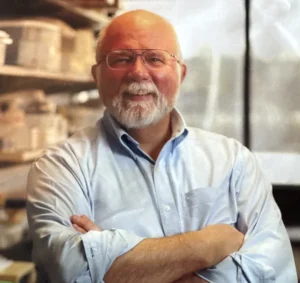
As with many large NIH-funded cardiometabolic study biorepositories, the UVT Biorepository run by Russ Tracy served the CALERIE
study as its biorepository. Not only did the institution receive, store and catalog our samples, it performed much of the lab-based assays for the trials, and distributed samples until they were transferred to the NIA Research Biorepository. Perhaps most important, Russ served as a font of knowledge about how to manage a study biorepository. His most memorable and helpful statement — "The only good biorepository is an empty biorepository.
05/01/2026
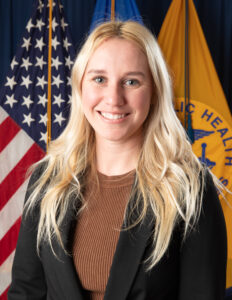
Emma J. Stinson is a Statistician at the National Institute of Diabetes and Digestive and Kidney Diseases (NIDDK) in Phoenix, Arizona, and is currently pursuing a PhD in Biomedical Informatics and Data Science at Arizona State University. Her research focuses on the development and application of statistical and data-driven methods to study metabolic health, with an emphasis on energy intake and energy expenditure. She is the lead author of a recent Journal of Nutrition publication from the CALERIE study using machine learning to identify determinants of habitual preformed water intake. Her findings showed that data-driven machine learning models can identify novel dietary and physiological factors associated with habitual preformed water intake, relationships that may be missed using traditional statistical approaches, contributing to a deeper understanding of hydration and metabolic health.
01/13/2026
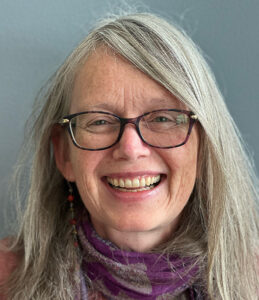
Dr. Rozalyn Anderson is a Vilas Distinguished Professor in the Department of Medicine in the Division of Geriatrics and Gerontology at the University of Wisconsin-Madison School of Medicine and Public Health. Dr. Anderson is Director of the NIH/NIA sponsored Wisconsin Nathan Shock Center of Excellence in the Basic Biology of Aging (WiNSC), Director of the Metabolism of Aging program, Director of the Biology of Aging and Age-Related Diseases T32 training program, and Associate Director of Research in the Geriatric Research, Education, and Clinical Center at the William S Middleton Memorial Veterans Hospital.
She is a Fellow and former Chair of the Biological Sciences section of the Gerontological Society of America and a Fellow and former President of the American Aging Association. She a recipient of the Nathan Shock New Investigator Award (GSA), the Biological Mechanisms in Aging Award (Glenn Foundation), the Breakthroughs in Gerontology Award (AFAR), and the Denham Harman Award (American Aging Association).
Dr. Anderson’s group recently published the following manuscript:
Clark JP, Rhoads TW, McIlwain SJ, Polewski MA, Pavelec DM, Colman RJ, Anderson RM. Caloric Restriction Reprograms Adipose Tissues in Rhesus Monkeys. Aging Cell. 2025 Dec;24(12):e70254. doi: 10.1111/acel.70254. Epub 2025 Oct 3. PMID: 41042069; PMCID: PMC12686577.